

Why We Choose Peccary Leather for our Driving Gloves
It is not the easiest leather to work with. It is simply the best one for a glove that has to last.
Most driving gloves are chosen for how they look on a shelf. Ours are chosen for how they feel a decade in — which is a different test entirely, and one that ruled out almost everything before it ruled anything in. We looked at lambskin, at sheepskin, at deerskin, at the usual candidates for a fine glove. We're still fans of several of them. But for the pair meant to outlast the car it was bought for, peccary leather was the only real answer.
Peccary comes from a wild, bristled animal native to the scrublands of Peru and Argentina — not farmed, not uniform, and smaller-skinned than the cattle hide most leather goods are cut from. That scarcity is part of the point. Every hide carries its own scars and small imperfections from a life spent in the bush, which means no two gloves are quite the same. We consider that a feature of the material, not a flaw to be tanned away.
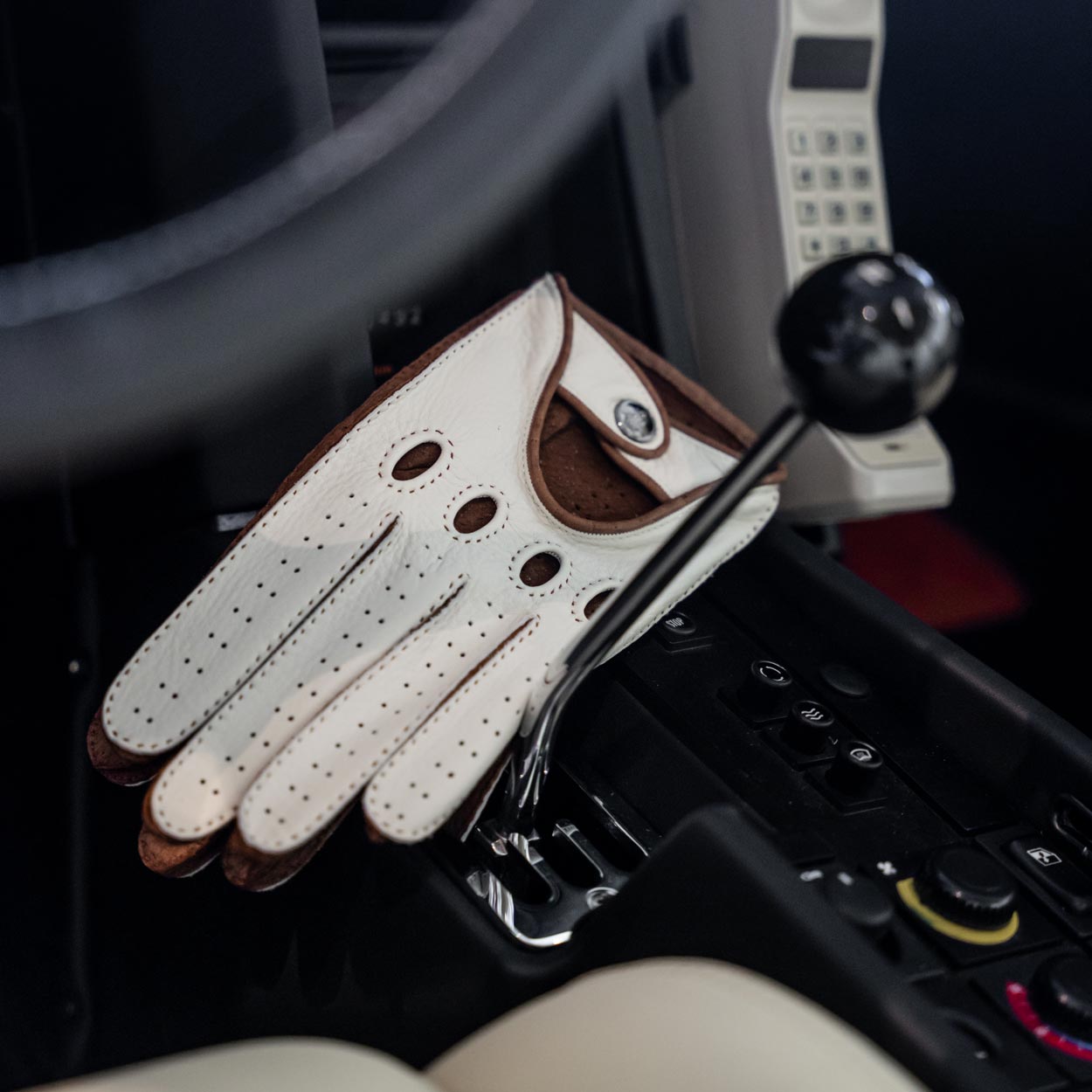
There's a way to tell real peccary from an imitation, and it's worth knowing: look closely at the grain and you'll find the hair pores grouped in threes — a soft, faintly pebbled texture unlike any other leather used for gloves. It's a small detail, but it's the kind our customers tend to notice, and the kind that's hard to fake.
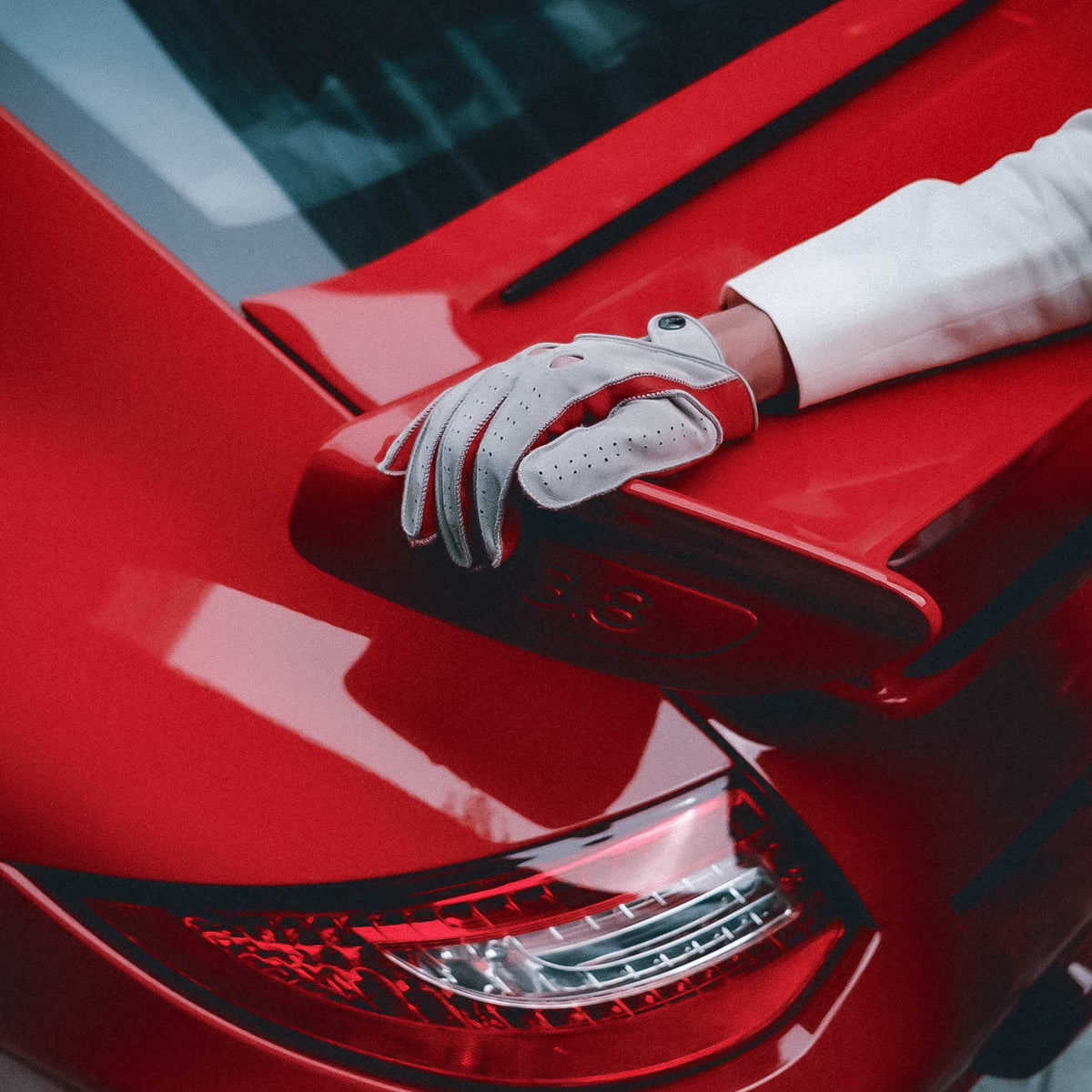
What earns peccary its place on a steering wheel, though, is how it behaves once it's on the hand. The leather has what we can only describe as memory — stretch it, wear it, and it eases back toward its original shape rather than sagging into a new one. Paired with a natural elasticity that's rare even among fine leathers, this is what lets a peccary glove behave like a second skin instead of a barrier, gripping a leather-wrapped wheel rather than sliding against it. It only grows more supple with wear, taking on the particular shape of the hand that wears it — a patina in the truest sense, not unlike the softening of a favorite jacket.
It's also, despite that softness, notably tough. Peccary runs slightly thicker than lambskin or deerskin, which gives it both a more substantial feel in the hand and a durability the softer leathers can't match — the reason a well-kept pair earns years of regular use rather than a season or two. If you're weighing peccary against deerskin for your own pair, the short version is this: deerskin is the lighter, more breathable choice for warm-weather driving, while peccary trades a touch of that lightness for grip and longevity. We'll cover that comparison properly in its own piece — for most drivers, either is a considered choice.
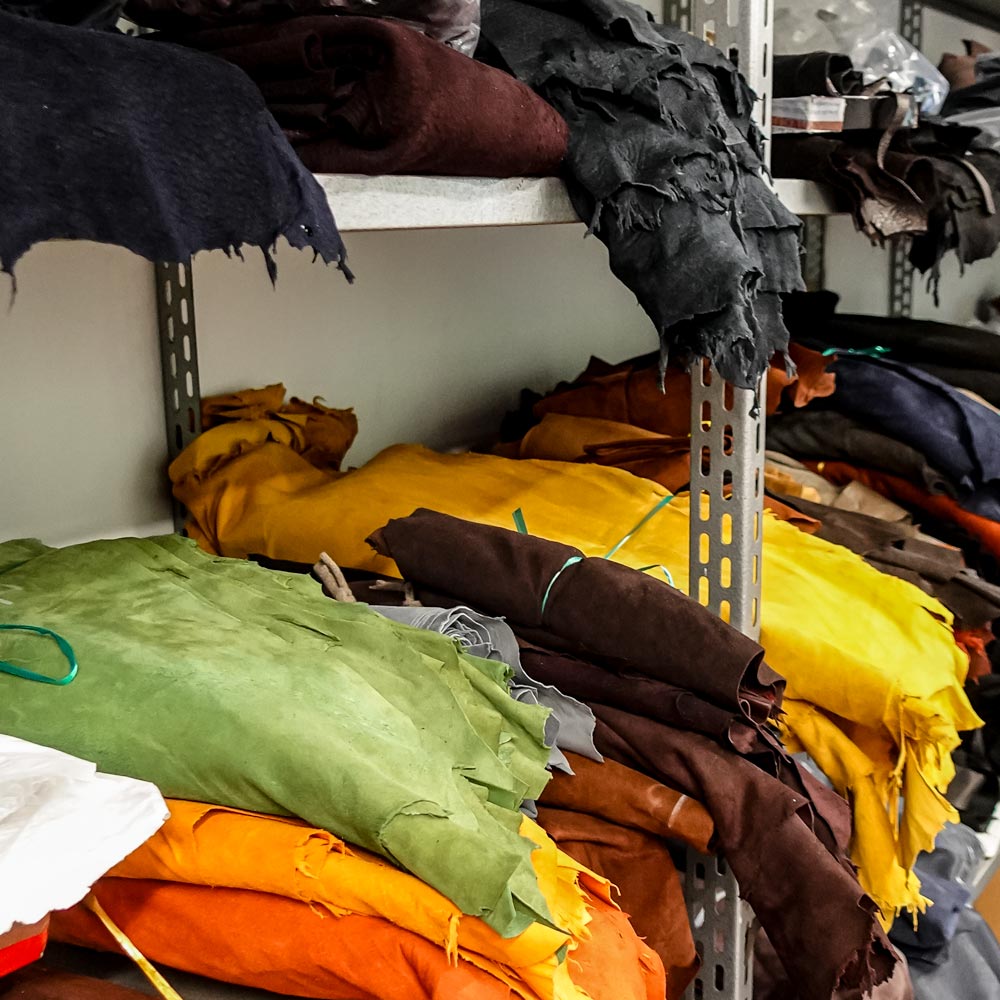
None of this happens without care on our end, too. Every peccary hide we use is sourced and hunted under CITES guidelines — legal, controlled, and traceable — and we pay a meaningfully higher price for it than we would for a farmed alternative, because a wild-sourced material done properly costs more. The hides travel from South America to Italy, where the tanning is done by hand in a way that respects both the leather and the people doing the tanning — a deliberate choice, given how much of the leather industry doesn't.
Cutting it is its own discipline. Peccary skins are small and irregularly shaped, and given every one carries its own scars, cutting a single unblemished panel for a glove's back or palm takes a practiced eye and a steady hand — there is no machine for this part. It's one reason a finished pair takes hours rather than minutes, and one more reason so few workshops choose to work with the material at all.
Cared for properly — kept away from direct heat, wiped rather than soaked, reconditioned occasionally rather than often — a peccary glove will age the way good leather is supposed to: darkening slightly, softening further, becoming more particularly yours with every drive. We've written a full guide to that care, linked below, for anyone who wants the specifics.
It costs more than the alternative. We've never pretended otherwise. But if a glove is meant to be part of the ritual for years rather than one season, peccary is the material that actually holds up that promise — which, in the end, is the only reason we chose it.
Related reading
• The making of a driving glove (production process)
• How to care for your driving gloves

Leave a comment
This site is protected by hCaptcha and the hCaptcha Privacy Policy and Terms of Service apply.